×

The Standard e-Paper
Home To Bold Columnists





Audio By Vocalize
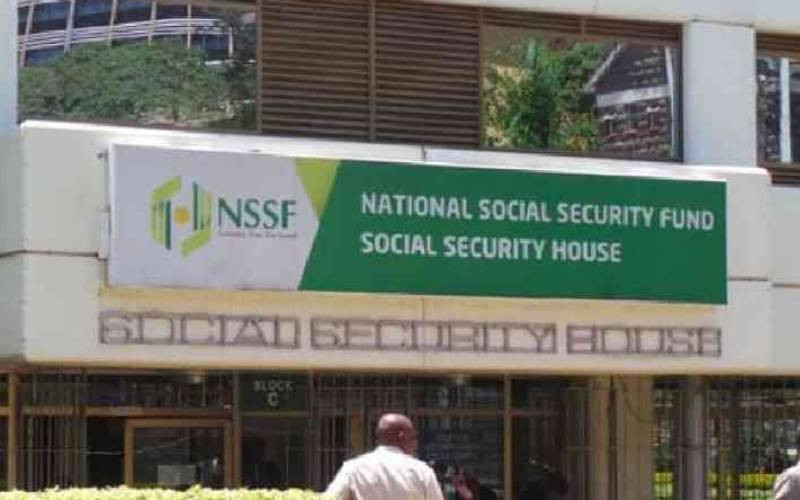
Court of Appeal ruling leaves NSSF contributions at the current Sh200 monthly rate. [File, Standard]
Millions of Kenyan workers and employers will continue paying the lower Sh200 monthly contributions to the National Social Security Fund (NSSF) after the Court of Appeal declined to suspend a judgment declaring the NSSF Act, 2013, unconstitutional.
The decision effectively blocks enforcement of the higher NSSF deductions introduced under the law, sparing workers and employers from significantly increased mandatory contributions.
Under the nullified Act, both employers and employees were required to contribute six per cent of an employee’s gross salary. This marked a sharp increase from the flat Sh200 monthly contribution provided under the previous NSSF Act, Cap. 258.
For example, a worker earning Sh50,000 would have contributed Sh3,000 monthly, matched by an equal amount from the employer.
In a ruling delivered on Friday, appellate judges Wanjiru Karanja, Kairu M’Inoti and Pauline Nyamweya dismissed an application by the NSSF Board of Trustees seeking to stay the execution of a September 2022 judgment by the Employment and Labour Relations Court (ELRC), which nullified the Act.
The judges held that although NSSF had raised arguable grounds of appeal, it had failed to demonstrate that the appeal would be rendered nugatory if the stay orders were denied. “In the end, and since the applicant has only satisfied one of the two limbs necessary for the grant of the orders sought under Rule 5(2)(b) of this Court’s Rules, we find no merit in the Notice of Motion dated October 14, 2022, which is hereby dismissed with costs,” the judges ruled.
The dispute stems from the ELRC’s finding that the Act was enacted without Senate involvement despite affecting county government finances, rendering it unconstitutional, null and void.
The ELRC also found that the law created an unfair monopoly in favour of NSSF while undermining private pension schemes. “The trial court found that the Act heavily favoured NSSF over third-party pension providers, violating the Competition Act and threatening existing pension frameworks,” the ruling states.
The court further held that requiring workers already enrolled in superior pension schemes to join NSSF amounted to an unjustifiable limitation on freedom of choice.
The NSSF Board, chaired by Gen (Rtd) Julius Karangi, moved to the Court of Appeal in October 2022, warning that failure to suspend the judgment would trigger a governance crisis and disrupt the fund’s operations.
The fund argued that the ruling would undermine the “Haba na Haba” informal sector savings scheme, affecting more than 580,000 members and placing about Sh975 million in pension savings at risk. It also argued that reverting to Cap. 258 would dismantle a contribution model that had generated Sh7.28 billion in enhanced savings.
However, employers and lobby groups opposed the application, maintaining that there was no legal vacuum because the previous NSSF law remained in force.
The Kenya Tea Growers Association and the Federation of Kenya Employers argued that employers had continued remitting contributions under the old regime, following earlier court orders and that Cap. 258 automatically filled any legislative gap.
The Court of Appeal agreed, finding that NSSF had failed to provide evidence showing how the fund would collapse or suffer irreparable harm if the stay orders were denied.
The Consumers Federation of Kenya (Cofek) welcomed the ruling, describing it as a major victory for workers. Cofek Secretary-General Stephen Mutoro said the decision effectively confirmed that the NSSF Act, 2013, remains unconstitutional and that higher deductions under the law cannot be enforced.
Subscribe to our newsletter and stay updated on the latest developments and special offers!